Finishing
Finishes matched to the alloy and the application
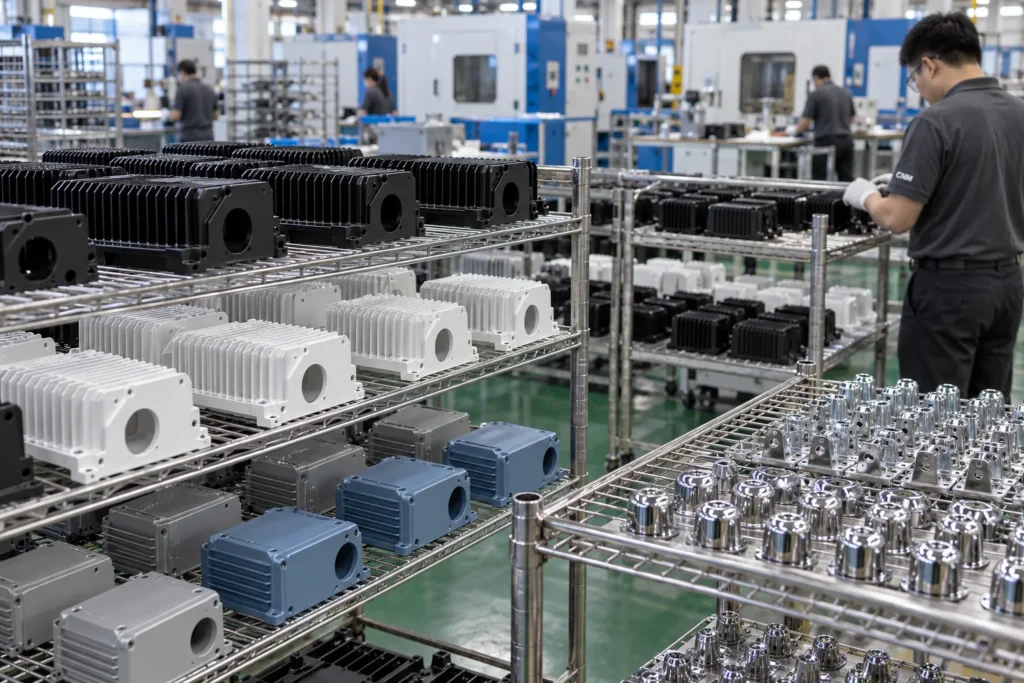
The finish has to suit the alloy. Aluminum die castings are usually shot blasted, then powder coated, painted or E-coated over a conversion coating; parts that stay bare often get a trivalent chromium or chrome-free conversion coating only. Zinc die castings are often electroplated, with a copper strike followed by nickel and chrome for a bright finish, or they are powder coated and painted.
Anodizing causes the most surprises. A380 and ADC12 contain about 7.5–12% silicon plus copper, so the anodic layer comes out thin, grey and patchy instead of clear or brightly colored. If an anodized look is required, raise it at the design stage so the alloy, the color and the acceptance standard can be agreed.
Finishing options
- Shot blasting, deburring and polishing
- Powder coating
- Wet painting and E-coating
- Conversion coating (trivalent chromium or chrome-free)
- Electroplating on zinc: copper, nickel, chrome
- Anodizing, within the alloy limits above
Finishing FAQ
What is the most common finish for aluminum die castings?
Powder coating over a conversion coating. It is durable, covers casting marks and comes in any RAL color. Wet paint and E-coat are also common.
Why do die cast aluminum parts look grey after anodizing?
A380 and ADC12 contain a lot of silicon, which does not anodize, plus copper, which disturbs the layer. The result is a thin, dark and uneven surface.