Machining
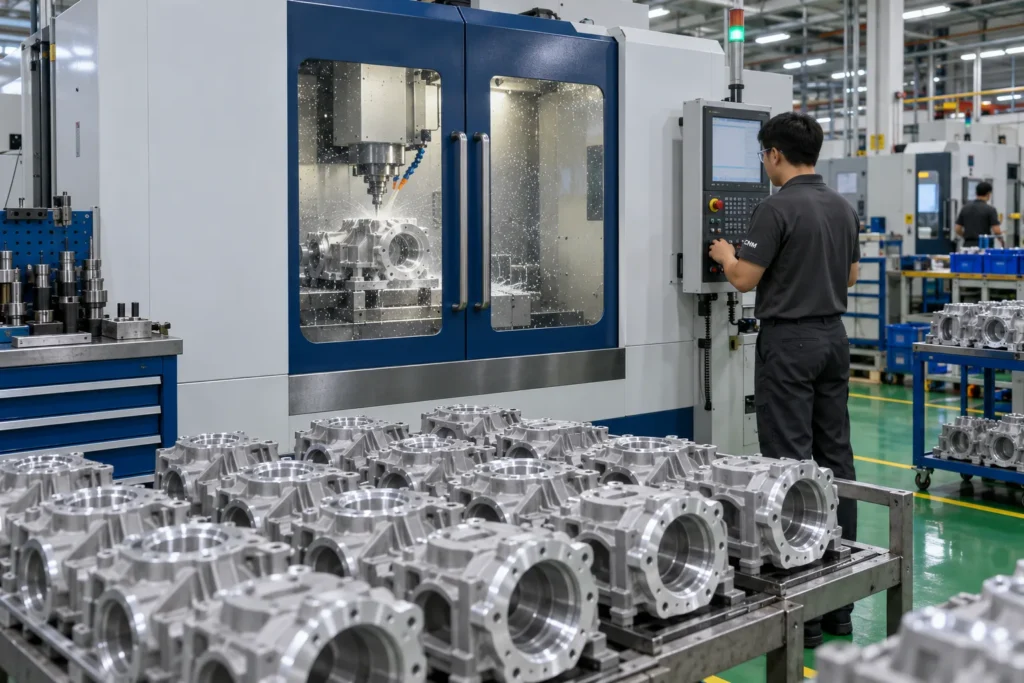
CNC machining that respects the casting
Die castings are near net shape, but sealing faces, bearing bores, threads and tight-tolerance features are usually machined. Three things decide whether this goes smoothly: datums that cast consistently, a small machining allowance (typically a few tenths of a millimeter up to about 1 mm), and machined faces kept out of thick, porosity-prone sections. The dense skin of a die casting is only a fraction of a millimeter deep, so heavy cuts tend to open porosity.
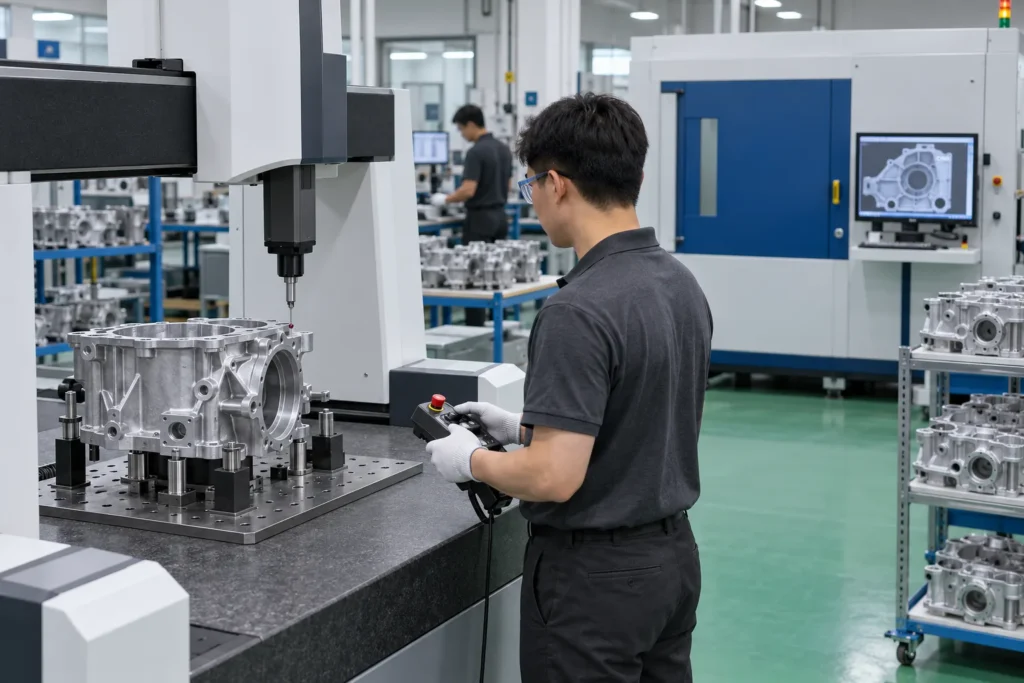
We machine castings on CNC with fixtures made for each part and check machined features against your drawing.
Typical machining on castings
- Sealing and mounting faces
- Bearing and shaft bores
- Tapped and thread-milled holes
- Cross holes and ports
- O-ring grooves
- Deburring of machined edges
Machining FAQ
How much machining allowance does a die casting need?
Typically a few tenths of a millimeter up to about 1 mm, depending on part size and the feature. More allowance cuts through the dense surface skin and can expose porosity.
Why can machining expose porosity?
The skin of a die casting is dense, while thick sections can hold gas or shrinkage porosity. Uniform walls and small machining allowances keep machined surfaces sound.