AAA MOULD

AAA MOULD

Zinc Die Casting

Zamak die casting

Zinc die castings for small, detailed and plated parts

Zamak 3 and Zamak 5 melt at about 385 °C and are cast on hot chamber machines, where the injection system sits in the molten zinc. They fill walls under 1 mm on small parts, reproduce fine detail, hold dimensions closely, and the cast surface takes nickel and chrome plating well. The die runs much cooler than in aluminum casting, so zinc dies typically last several times longer.

Zinc suits small and medium parts: lock bodies and door hardware, furniture and bathroom fittings, decorative trim, connector housings, small gears and levers. Check two limits at the design stage. Zinc is about 2.5 times as heavy as aluminum, and Zamak creeps under sustained load, more so above roughly 50 °C (typical).

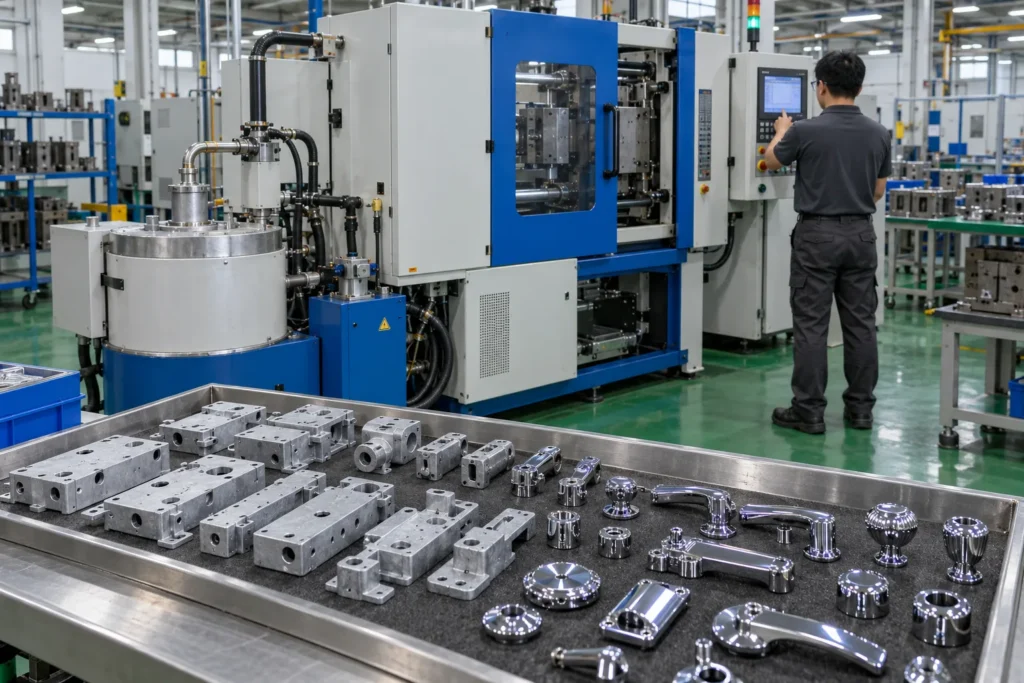
Hot chamber zinc die casting machine with raw and chrome plated Zamak parts
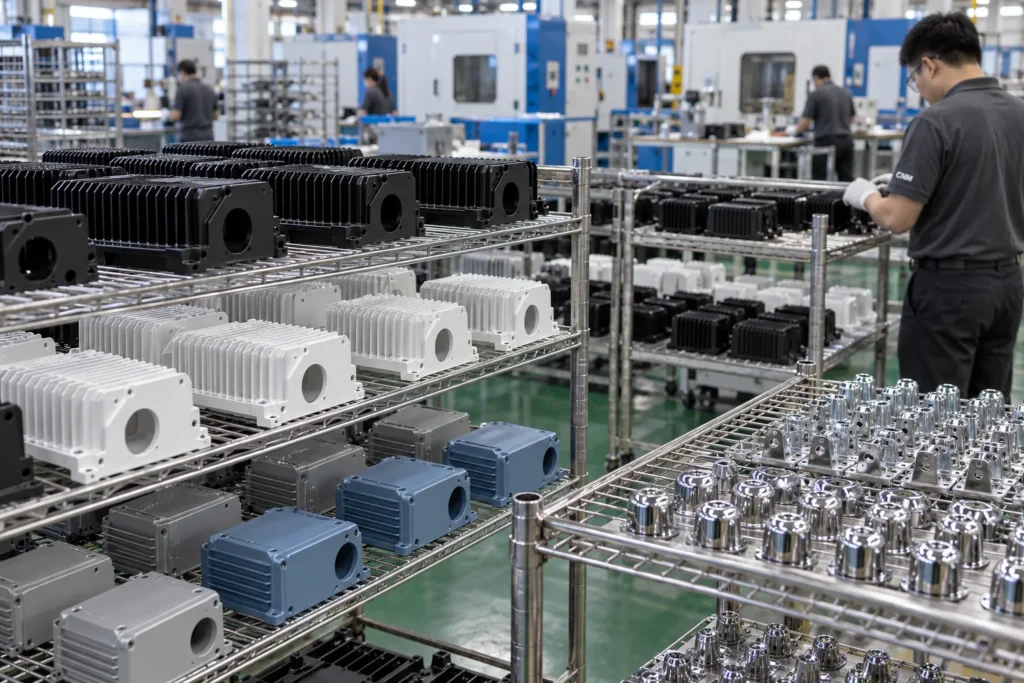
Powder coated aluminum housings and chrome plated zinc die castings

Typical zinc die cast parts

Zinc die casting at a glance (typical)

Common alloysZamak 3, Zamak 5, Zamak 2
Machine typeHot chamber
Wall thicknessThinner than aluminum; under 1 mm is common on small parts
DraftTypically about 0.5–1°, less than aluminum
Die lifeTypically several hundred thousand to over a million shots, far longer than aluminum dies
Surface optionsCopper, nickel and chrome plating, powder coating, painting, polishing

Zinc die casting FAQ

Zamak 3 or Zamak 5?

Zamak 3 is the default: stable dimensions, good ductility, easy to plate. Zamak 5 contains about 1% copper for higher strength and hardness, with somewhat lower ductility.

Why choose zinc instead of aluminum?

For small, detailed parts that need thin walls, close dimensions and a plating-quality surface. Zinc is about 2.5 times as heavy as aluminum and creeps under sustained load, so larger, weight-sensitive or loaded parts near heat are usually better in aluminum.

Can zinc die castings be chrome plated?

Yes, it is routine for hardware and decorative parts: polishing, a copper strike, then nickel and chrome. Plating shows every surface flaw, so cosmetic faces, gate positions and parting lines are agreed before the die is made.

Have a casting to quote? Tell us the part, the alloy and the annual volume.