AAA MOULD

AAA MOULD

Aluminum Die Casting

Aluminum HPDC

Aluminum die castings for housings, heat sinks and brackets

Aluminum die casting is the usual choice for housings and enclosures that must be light and carry heat away: motor and gearbox housings, heat sinks and LED lamp bodies, telecom enclosures with cast fins, control unit housings, brackets and covers. Aluminum is cast on cold chamber machines.

Most parts are cast in A380 or ADC12. Both contain 1.5–4% copper, which helps castability and strength but lowers corrosion resistance, so outdoor parts are usually powder coated or cast in a low-copper alloy such as A360 or AlSi10Mg(Fe). A413 is chosen where pressure tightness and flow into thin sections matter most.

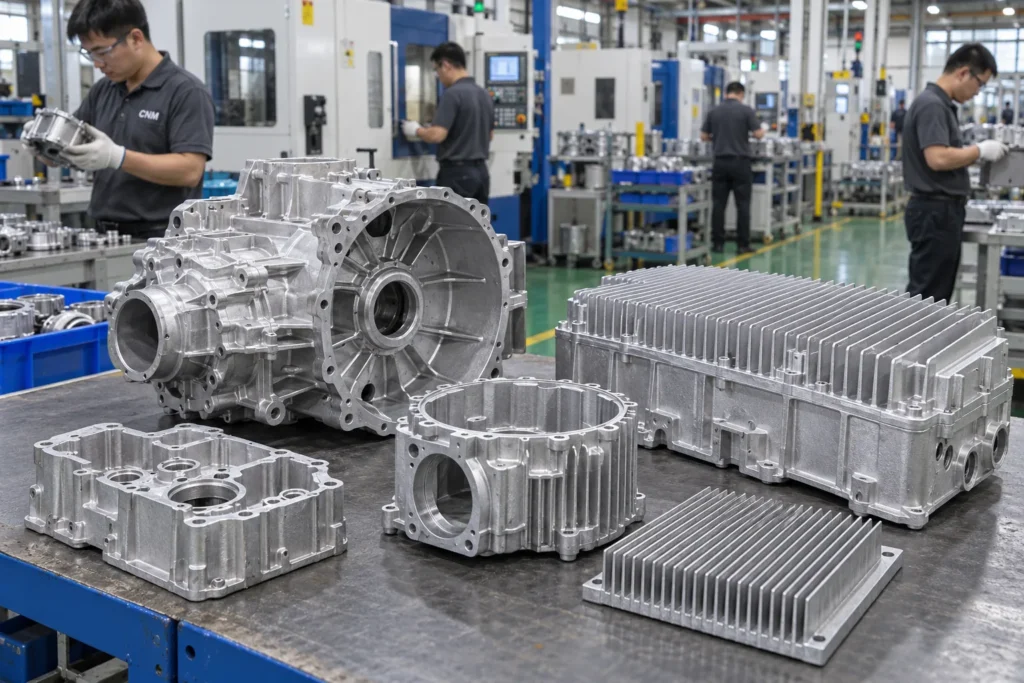
Aluminum die cast gearbox housing, motor housing, finned enclosure and heat sink
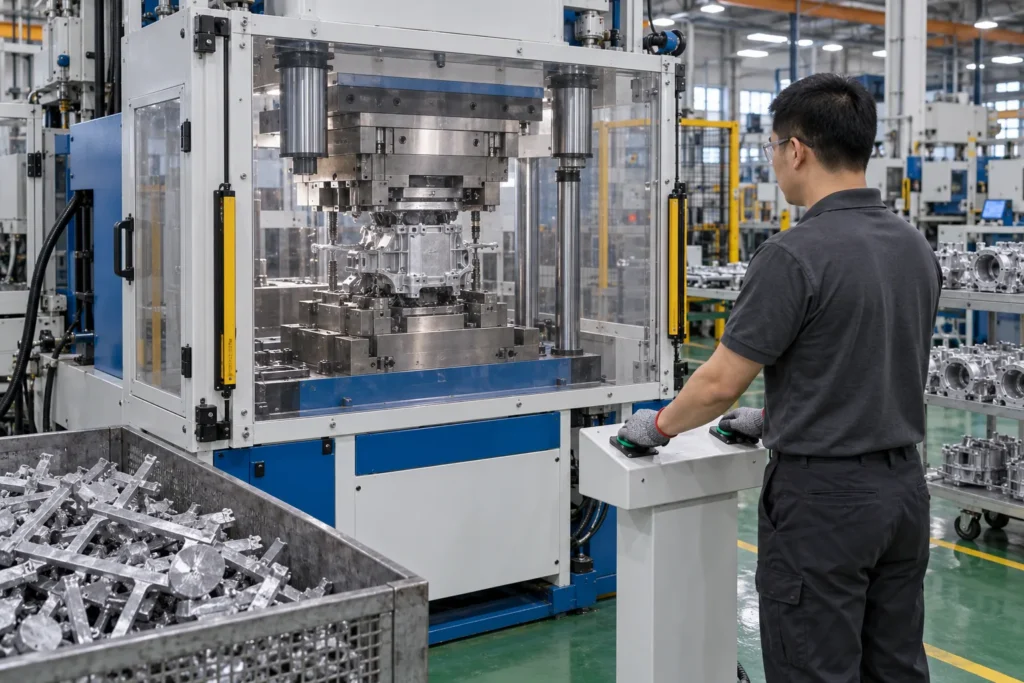
Trim press removing runners and overflows from aluminum die castings

Typical aluminum die cast parts

Aluminum die casting at a glance (typical)

Common alloysA380, ADC12 (YL113), A360, A413, AlSi10Mg(Fe)
Machine typeCold chamber
Wall thicknessTypically about 1.5–4 mm; down to about 1 mm on small parts with short flow paths
DraftTypically about 1–2°; inner walls and cores need more than outer walls
Surface optionsAs cast, shot blasted, powder coated, painted, E-coated, conversion coated
Secondary opsTrimming, deburring, CNC machining, tapping; leak test and impregnation requirements agreed at quotation

Aluminum die casting FAQ

Which aluminum alloy should I use?

A380 or ADC12 for most parts. They cast well and balance strength and cost. A360 or A413 when pressure tightness matters, and a low-copper alloy when corrosion resistance does. If the part has to be welded or heat treated to T6, gravity casting in A356 is usually the better route.

Can aluminum die castings be anodized?

Technically yes, but A380 and ADC12 anodize to a thin, grey, uneven layer because of their silicon and copper content. For appearance, powder coating or painting is the usual choice.

Are aluminum die castings pressure tight?

They can be, with even walls, gating and venting planned for the leak-tight zones, and machining kept out of thick sections. Leak-tight castings are normally leak tested, and vacuum impregnation can seal remaining micro-porosity.

Have a casting to quote? Tell us the part, the alloy and the annual volume.