Tooling
Die casting molds designed for filling, cooling and die life
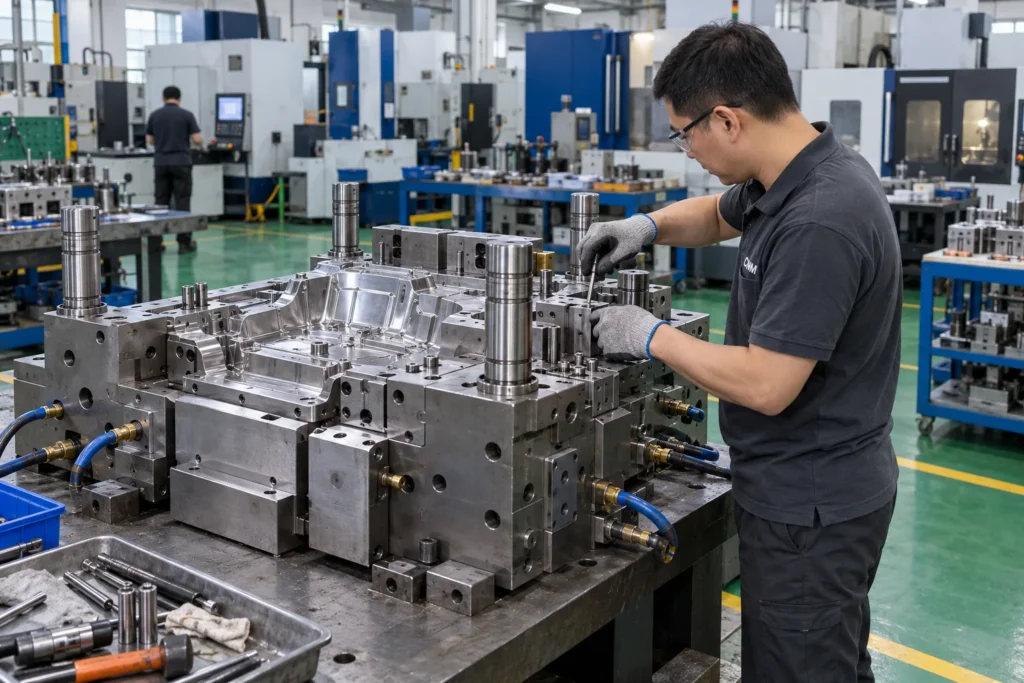
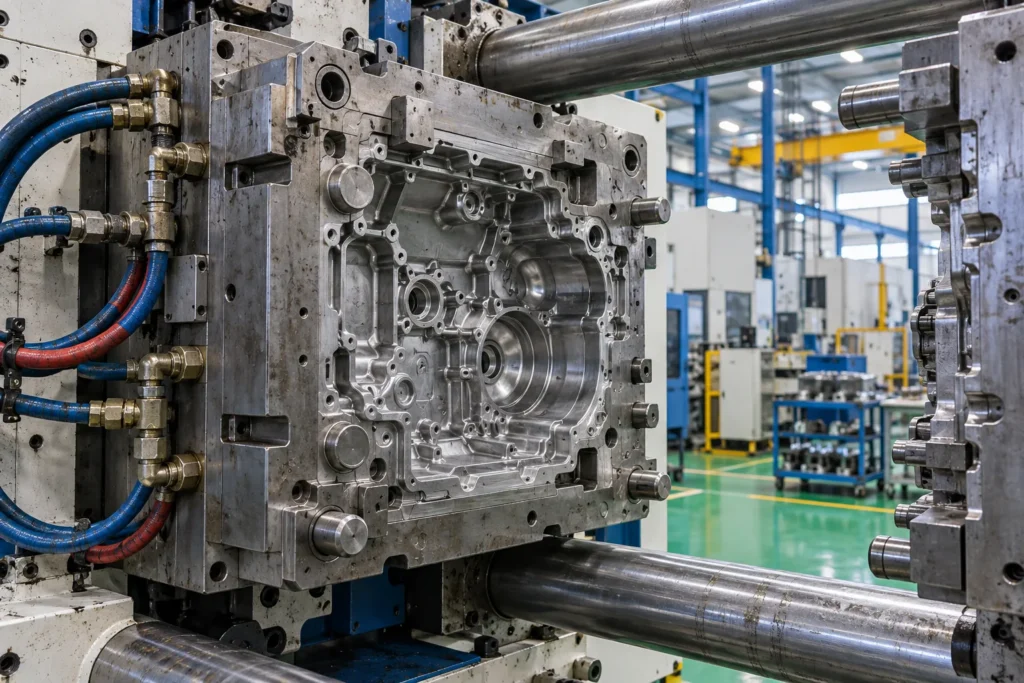
The die decides most of what happens in die casting: how the metal fills, where the air goes, how fast each section cools and how many shots the die lasts. A die casting die is a set of hardened hot-work steel cavity and core inserts in a mold base, with runners and gates, overflows and vents, water or thermal oil channels, slides for undercuts and an ejector system.
We design the die in 3D after the DFM review and build it in our own tool room with CNC machining, EDM and wire cutting. For porosity-critical parts we recommend a filling and solidification simulation before steel is cut; tell us if your project requires a simulation report.
What goes into a die casting die
- Cavity and core inserts in H13-class hot-work steel, hardened and tempered
- Runners, gates, overflows and vents laid out for filling and venting
- Water and thermal oil channels for die temperature control
- Slides and core pulls for undercuts and side holes
- Ejector pins on ribs and bosses, so hot castings come out without distortion
- Trim die to remove runners, overflows and flash
Die casting dies at a glance (typical)
| Insert steel | Hot-work tool steel H13 / 1.2344, or premium ESR grades such as ASSAB 8407 for longer life |
|---|---|
| Insert hardness | Typically about 44–48 HRC for aluminum dies |
| Layout | Single or multi-cavity, depending on part size and volume |
| Gating | Runner, gates, overflows and vents designed for filling and venting |
| Temperature | Cooling water and/or thermal oil channels |
| Undercuts | Slides and core pulls |
| Trim die | Separate tool to remove runners, overflows and flash |
Die casting mold FAQ
How long does a die casting die last?
As a typical order of magnitude, an aluminum die in H13-class steel runs about 50,000–150,000 shots before the cavity inserts need replacing; heat checking, the fine thermal-fatigue cracks on the cavity surface, is the usual limit. Zinc dies often run several hundred thousand to over a million shots because zinc is cast roughly 250 °C cooler. Part size, gate design, die temperature control and maintenance move these figures a lot, so ask for the steel grade and expected life to be written into the die quotation.
Who owns the die?
Normally the customer who pays for the die owns it. Ownership, maintenance, insert replacement and storage are written into the quotation or tooling agreement.
Can you modify or repair an existing die?
Send us the die drawings, photos and a sample part. We review the condition and tell you what can be done.